ServicesWhole-house carbon filtration
Whole-House Carbon Filtration in Duncanville
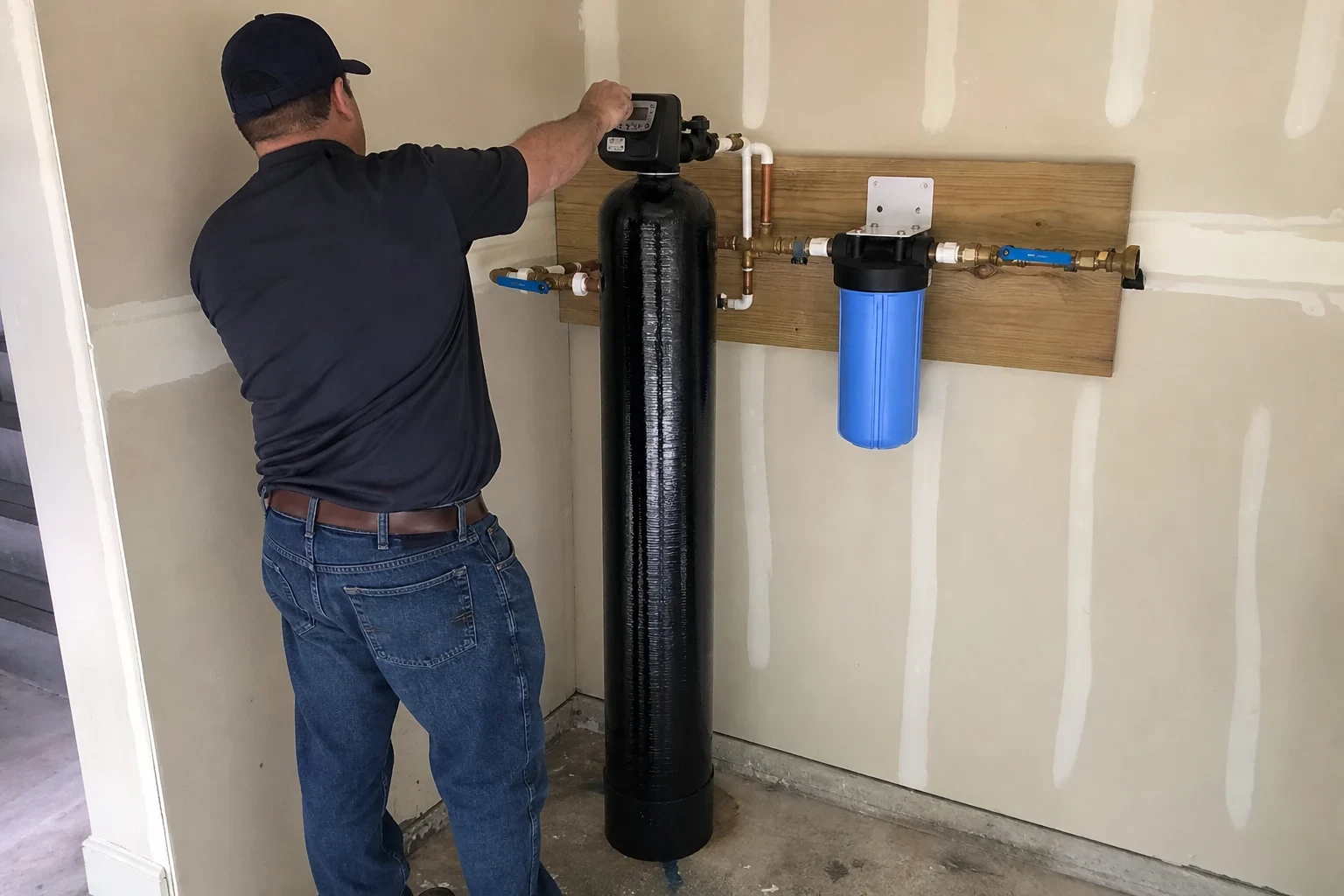
Our carbon systems mount on your main water line, so the shower, kitchen faucet and ice maker all stop smelling like a pool. Before anything goes in, we test your water to learn whether chlorine or chloramine is behind the odor, because that answer decides which carbon media will hold up.
What a whole-house carbon system does
Utilities disinfect city water so it stays safe on its trip through miles of pipe. That disinfectant is the taste in a glass from the tap and the smell rising off a hot shower. We install the carbon tank at the point your supply line comes into your home, ahead of the water heater and every fixture, where the media adsorbs the disinfectant before you ever use the water.
The detail most installers skip is the type of disinfectant. Free chlorine comes out easily with standard granular activated carbon. Chloramine, a chlorine and ammonia compound many utilities use, holds on longer and needs catalytic carbon plus enough contact time. Put the wrong media in and the smell comes back within weeks. We confirm which one your water carries before we recommend anything.
Carbon does not soften water, take out iron or remove dissolved minerals. If your test points to hardness, staining or lead from old plumbing, we will say so and point you to the right option, such as a softener after a hardness test, iron and sediment filtration or under-sink reverse osmosis.
What the work includes
Disinfectant and chemistry check
We test total and free chlorine at your tap to tell chlorine from chloramine. We also note pH and sediment, since both affect how long carbon lasts.
Media chosen for your water
Coconut shell GAC for free chlorine, catalytic carbon for chloramine. We explain the difference in plain terms and show you the test result that drove the choice.
Sizing by flow, not by guesswork
We count bathrooms and fixtures to estimate peak gallons per minute. An undersized tank pushes water through too fast, cuts contact time and drops your pressure.
Grit stage up front
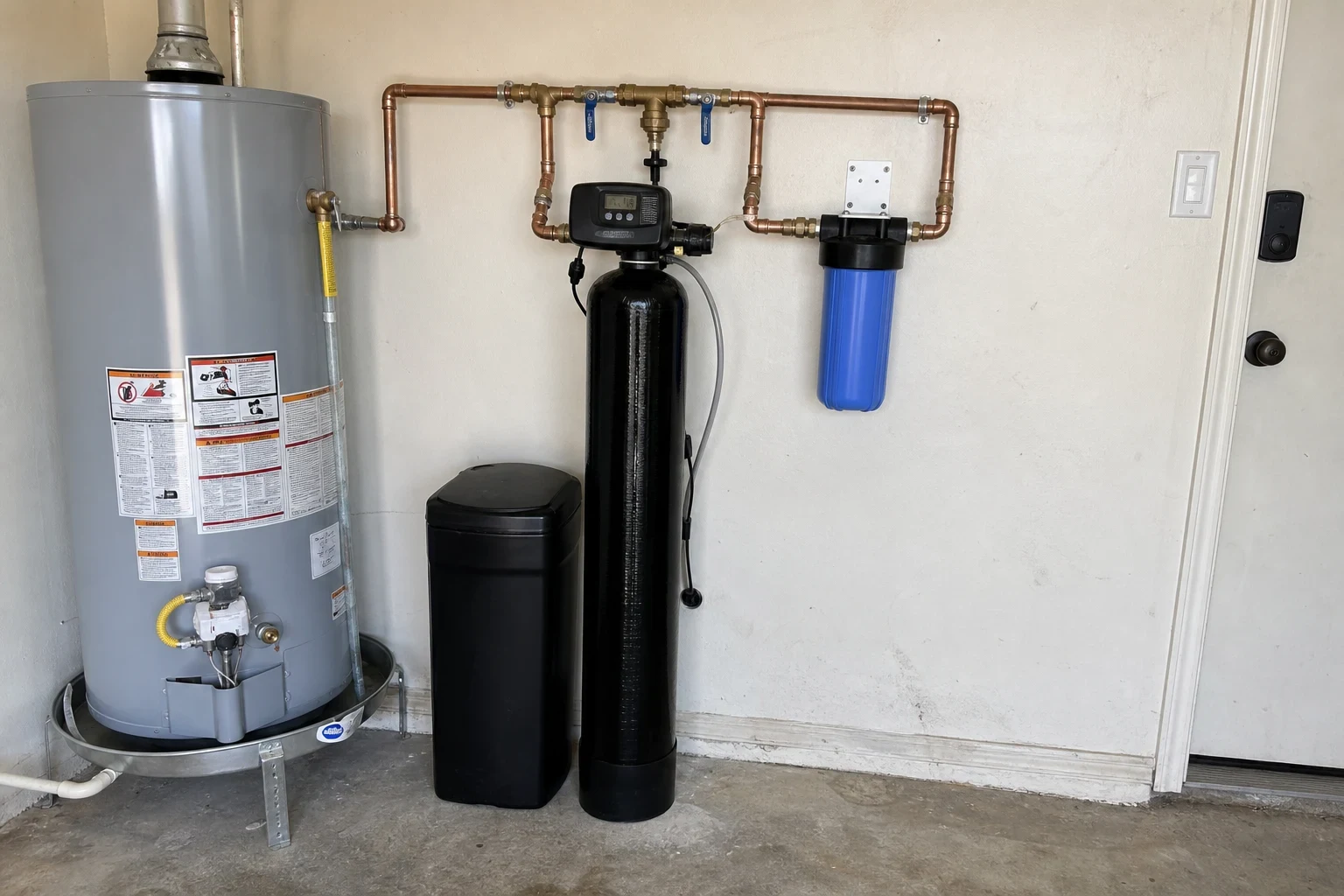
We mount a sediment cartridge before the carbon tank to trap sand, rust flakes and loose pipe scale. Keeping that debris out stops the carbon bed from clogging, and the cartridge costs far less to swap than the media it protects.
Bypass valve and shutoffs
Every install gets a bypass so you keep water during service. We add isolation valves so a filter change never means shutting down the whole house.
Clean, tested finish
We flush the new media until the water runs clear, check for leaks at every fitting and retest chlorine at a faucet so you see the change yourself.
Signs carbon filtration is the right fix
The shower smells like bleach
Chlorine escapes into the steam from hot water. When the bathroom smells like a pool, a kitchen-sink filter will not reach it. It has to be treated at the main line.
Off-tasting coffee, tea or ice
Chlorine compounds alter the taste of anything brewed or frozen. When pitcher-filtered water tastes right but ice from the fridge does not, the whole supply needs treating.
Your current filter quit early
The smell came back soon after a carbon system went in. That often points to standard carbon up against chloramine, or a tank undersized for your flow. We can tell you which.
You want treated water everywhere
Children drink at the bathroom sink and pets drink anywhere. One system on the main treats every outlet, with no separate filters to keep up with.
How the job runs
- 1
First call
Tell us what you smell, taste or see. We ask about your pipes and any existing filters, then book a test.
- 2
Testing at your faucet
We do the chlorine tests on site and check your main line, where the shutoff sits and how much room there is. Then you receive a written, line-item estimate for the right system.
- 3
Install day
We turn off the main, plumb in the prefilter, carbon tank and bypass, and cover the floor near the work. Most installs in a garage or utility area on reachable copper or PEX are done in one visit. We check whether a plumbing permit is needed before starting.
- 4
Flush, retest and show you around
We flush the media, test again, and show you the bypass and what future service involves. Then we tidy up and take the packaging with us.
What moves the price
The price comes from the equipment your water and house actually need, plus the plumbing it takes to put it in. We price after testing, so you are not paying for media your water does not call for. Your estimate lists each part and labor item separately.
- Chlorine or chloramine
- Catalytic carbon costs more than standard GAC and often needs a larger bed for contact time. Your test result settles this.
- Tank size and flow rate
- More bathrooms mean higher peak flow and a bigger tank. A cartridge housing costs less up front but needs changes more often than a backwashing or upflow tank.
- Location and pipe access
- A main line exposed in the garage is simple. A line buried in a wall or slab, or an outdoor spot that needs a cover against Texas sun, adds labor and materials.
- Added stages and permits
- A sediment prefilter is standard. Extra stages, new shutoff valves or a required permit are listed on the estimate before any work begins.
Questions about whole-house carbon
Something not covered here? (972) 885-6322
Does a whole-house system lower water pressure?
Not in a way you will notice when it fits your home's demand. Lost pressure usually comes from a tank or cartridge too small for the flow, or a prefilter full of debris. We size for peak use and show you how to spot when the prefilter is due.
Can whole-house carbon take out lead?
It is the wrong tool for that. Lead mostly enters from old solder or fixtures in the house, downstream of a main-line filter. Under-sink reverse osmosis is the better pick for drinking and cooking water, and water testing shows whether any lead is there.
Does it make my water soft?
No. Carbon captures chlorine and some organic compounds but does not touch calcium or magnesium. If scale worries you, we test hardness first and recommend a softener only when the reading backs it up.
How long before the carbon needs replacing?
Carbon is used up as its surface fills with captured disinfectant, so its life depends on how many gallons your home uses and how much chlorine or chloramine the supply carries. The equipment matters as well: a slim cartridge housing needs changes far more often than a full tank bed holding much more media. After testing, we give you a written change interval for your system, and our filter replacement and maintenance service can handle the changes.
Will it take out fluoride?
Very little. To cut fluoride in drinking water, reverse osmosis at the kitchen sink is the workable choice.
Find out what your water needs first
A short test tells us whether chlorine or chloramine is the problem and what size system your home can use. We serve Duncanville, DeSoto, Cedar Hill and nearby towns.