ServicesWater softeners
Duncanville Water Softener Installation, Tested First
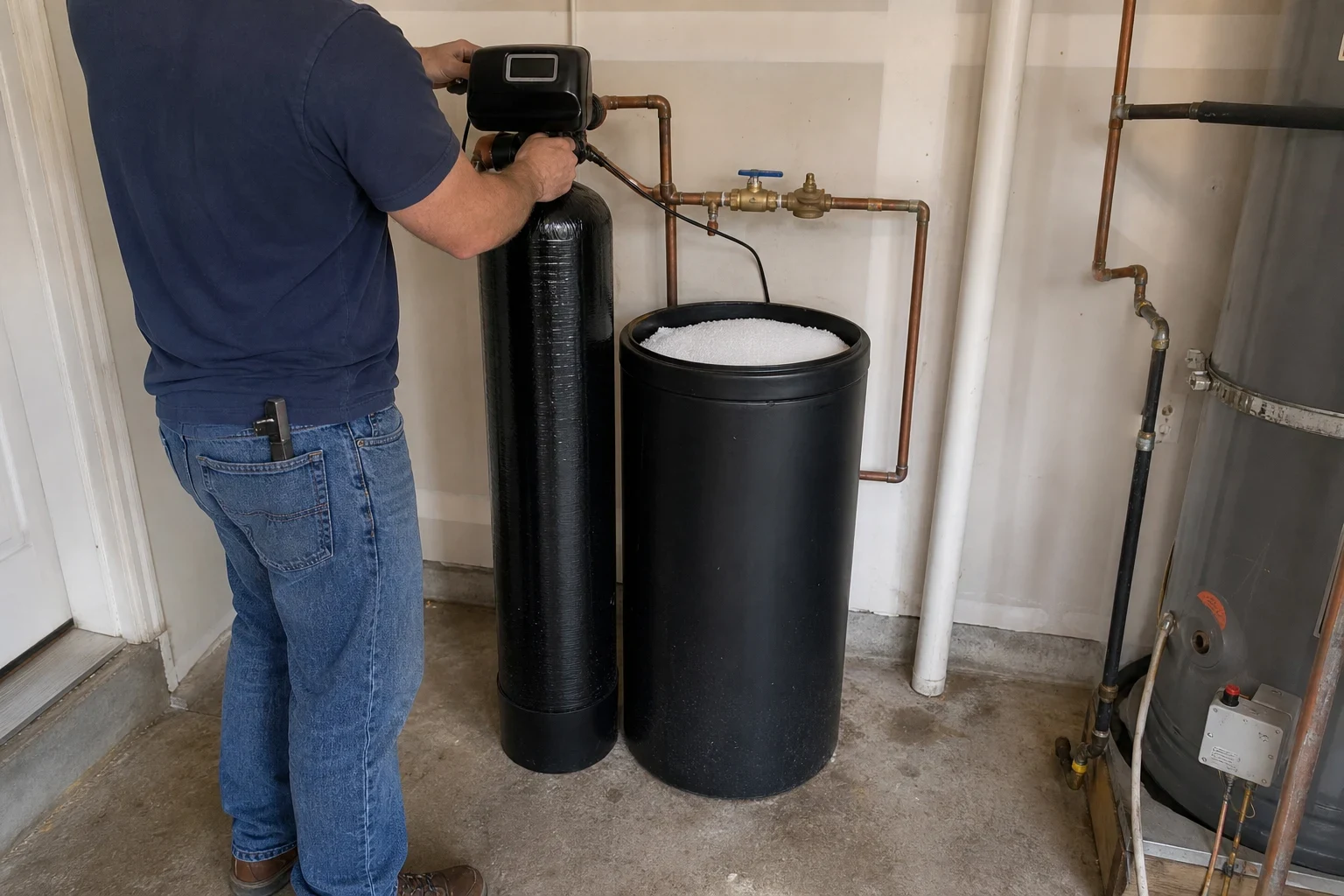
No softener goes in until we've read the hardness at your own tap. When the grains-per-gallon number justifies one, we size the resin bed to how much water your household uses and plumb it with a bypass and an air-gapped drain. When it doesn't, we show you what's really behind the problem.
Why the test comes before the softener
A water softener does one job. It swaps calcium and magnesium ions for sodium or potassium as water passes through a bed of resin beads. That stops the scale that builds on faucets, inside water heaters and on shower glass. It does nothing for chlorine taste, sediment or most stains, so buying one for the wrong problem means paying for salt and service on equipment that never fixes what bothered you.
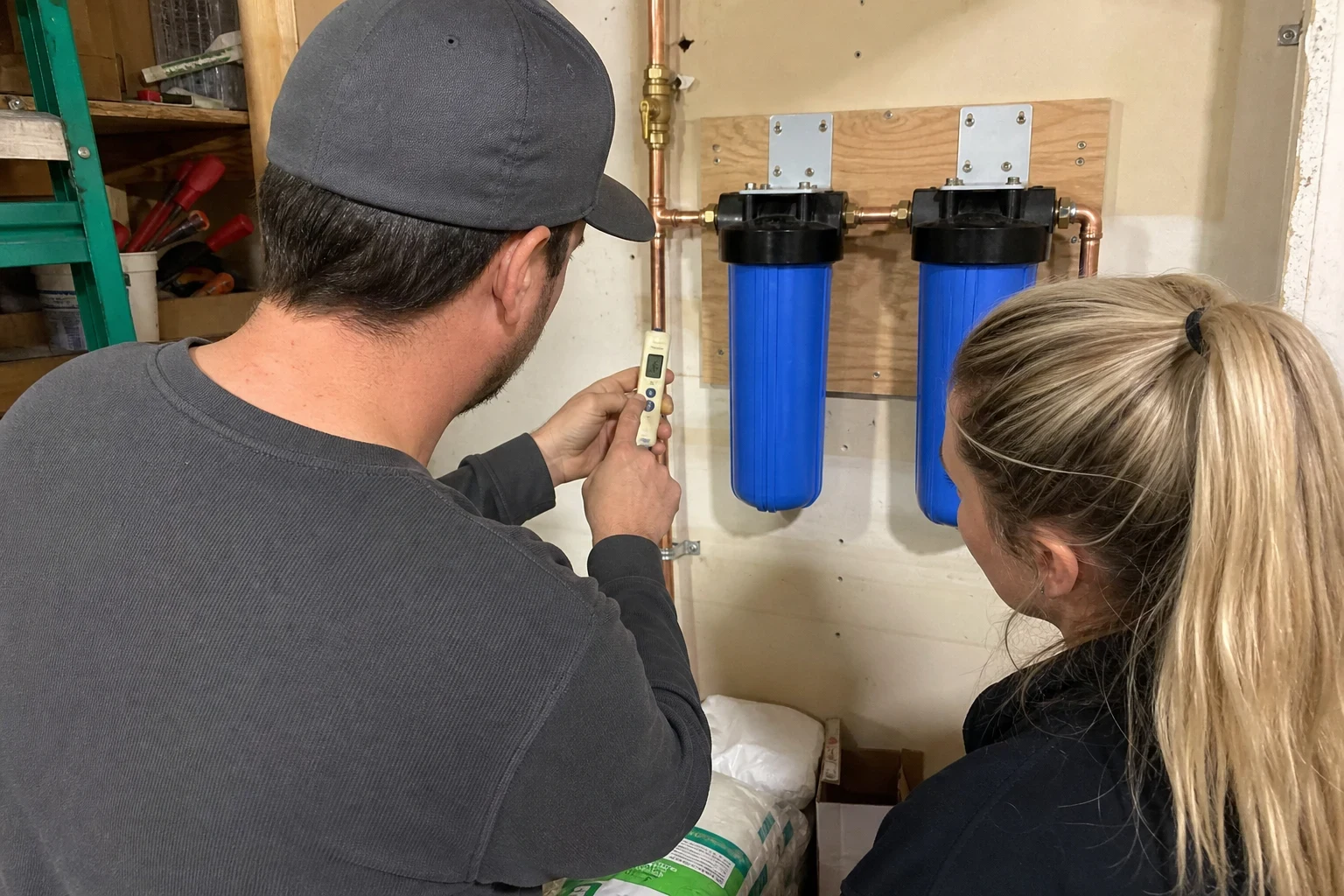
Hardness in North Texas varies with the source and season, so we don't guess. We run a hardness test at your home in grains per gallon and check iron, pH and total dissolved solids at the same time, because each of those changes the right answer. White crust on a showerhead points to hardness. Orange streaks point to iron. Cloudy spots on glassware can come from dissolved solids that a softener won't remove.
When the numbers support a softener, we install one sized to them. When they point elsewhere, we say so and walk you through options like iron and sediment filtration or whole-house carbon filtration.
What the softener service includes
- On-site hardness and water chemistry test
- We measure hardness in grains per gallon, plus iron, pH and dissolved solids. You see the readings before we talk about equipment.
- Sizing from your numbers
- We multiply your hardness by daily water use for the people in your home to get the grains removed per day. That sets the resin volume, so the unit regenerates every several days rather than burning salt nightly or running out early.
- Control valve and regeneration setup
- We favor demand-initiated valves that track gallons used and regenerate only when the resin is close to spent. We program the salt dose to your hardness so you aren't over-salting.
- Plumbing, bypass and drain
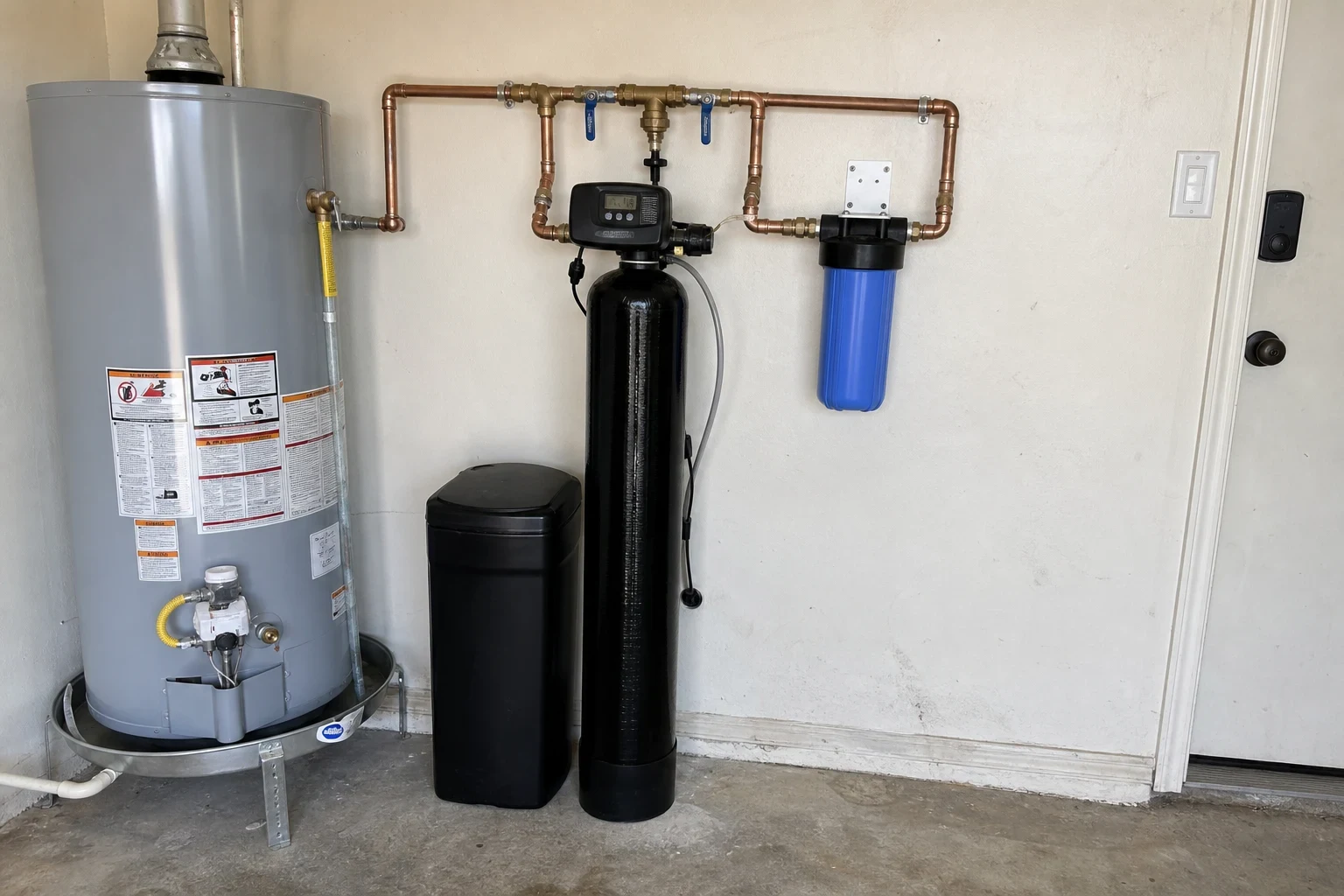
- We cut the softener into your main line with a bypass valve, so you can isolate it without shutting off the house. The drain line gets a code-proper air gap to keep wastewater from siphoning back.
- Pre-filtration when the test calls for it
- Chlorine slowly breaks down resin, and iron coats it. If your readings show either at a level that matters, we explain whether a carbon or sediment stage ahead of the softener will protect it.
- Startup check and cleanup
- After the first regeneration we retest the treated water to confirm it reads soft. Then we clear out packaging and old fittings.
Signs that point toward hard water
Chalky white crust on fixtures
Calcium carbonate leaves a hard white ring around faucet aerators and clogs showerhead nozzles. Vinegar dissolves it, which is a quick clue that it is mineral scale and not something else.
A water heater that pops or rumbles
Heating water forces dissolved minerals out, and they pile up as a crusty layer on the tank floor. Small pockets of water get sealed beneath that crust and flash to steam each time the burner lights, which is the popping you hear. The same layer insulates the water from the flame, so the heater burns more gas for the same hot shower.
Soap that won't lather
Calcium and magnesium react with soap to make a sticky scum rather than foam. Shampoo and dish detergent stretch further on soft water, while hard water tends to leave a gray film clinging to the tub walls.
Spotted dishes and stiff laundry
Spots that wipe off white usually mean hardness. Spots that stay cloudy may be dissolved solids, which is why we test before naming the cause.
Short life from water-using appliances
Dishwashers, ice makers and tankless heaters with scaled valves or heat exchangers are worth a hardness check before you replace the next one.
What moves the price of a softener
Most of the cost follows from your test results and your plumbing. A household with moderate hardness and a clear spot near the main line costs less to treat than one with high hardness, iron and a tight garage install. We price every job in writing after testing, so the estimate reflects your water, not a package.
Hardness level and household size
Higher grains per gallon and more people mean more resin to keep regeneration intervals reasonable. A larger tank costs more up front but uses salt more efficiently.
Valve type
A metered, demand-initiated valve costs more than a simple timer but saves salt and water over years of use.
Access to the main line and a drain
A softener needs the main line, a drain for the brine flush and an outlet. If those aren't close together, extra piping and labor add to the job.
Pre-treatment needs
Iron, sediment or chlorine at levels that would foul or degrade resin may call for a filter stage ahead of the softener.
How a softener job runs
- 1
Phone conversation
You tell us what you're seeing and where. We ask about household size, your water heater type and whether you've had water tested before.
- 2
Testing at your home
We draw samples from an untreated tap and read hardness, iron, pH and dissolved solids. We explain each number and whether a softener actually addresses your complaint.
- 3
Written recommendation
If a softener fits, you get a line-item estimate listing the unit size, valve, any pre-filter and the plumbing work. If it doesn't fit, you get the alternative and why.
- 4
Installation day
We shut off the main, install the bypass and softener near where the line enters your home, run the drain with an air gap, and fill the brine tank. Water is usually off for part of the visit, and we tell you how long before we start.
- 5
Retest and handoff
We run a regeneration, retest for hardness at a kitchen tap, and show you the bypass, the salt level and how to read the control valve.
Before you buy a softener
Is a softener worth it for a house in Duncanville?
It depends on what comes out of your tap. Moderate hardness is common, and some owners are fine living with it while others want the scale gone. A grains-per-gallon reading taken at your home is the only fair basis for the decision, so that reading comes before any recommendation from us.
Can I taste the sodium a softener adds?
Rarely. The sodium a softener puts in rises and falls with the hardness it takes out, and at moderate readings it stays below what most palates pick up. If you're watching sodium, under-sink reverse osmosis at the kitchen sink strips most of it from drinking water, or you can fill the brine tank with potassium chloride instead of salt.
What about salt-free conditioners?
Salt-free units don't remove calcium and magnesium; they change how the minerals behave so less scale sticks. They can reduce scale but won't give you the slick feel or better lather of softened water. We'll tell you which approach fits your readings.
Will a softener fix orange stains?
Usually not. Orange or brown staining comes from iron, and while resin can handle small amounts, higher levels foul it. Iron and sediment filtration is the right fix for that, and our test tells us which one you need.
How much upkeep does a softener need?
You add salt to the brine tank as the level drops, often every month or two depending on size and use. Occasionally the brine tank needs cleaning, and any pre-filters need cartridge changes. Our filter replacement and maintenance service can handle that on a schedule.
Get a hardness reading before you buy
We'll test your water, show you the numbers and tell you plainly whether a softener solves your problem. If it does, we'll size it right the first time.