ServicesFilter replacement
Filter Replacement and Maintenance in Duncanville
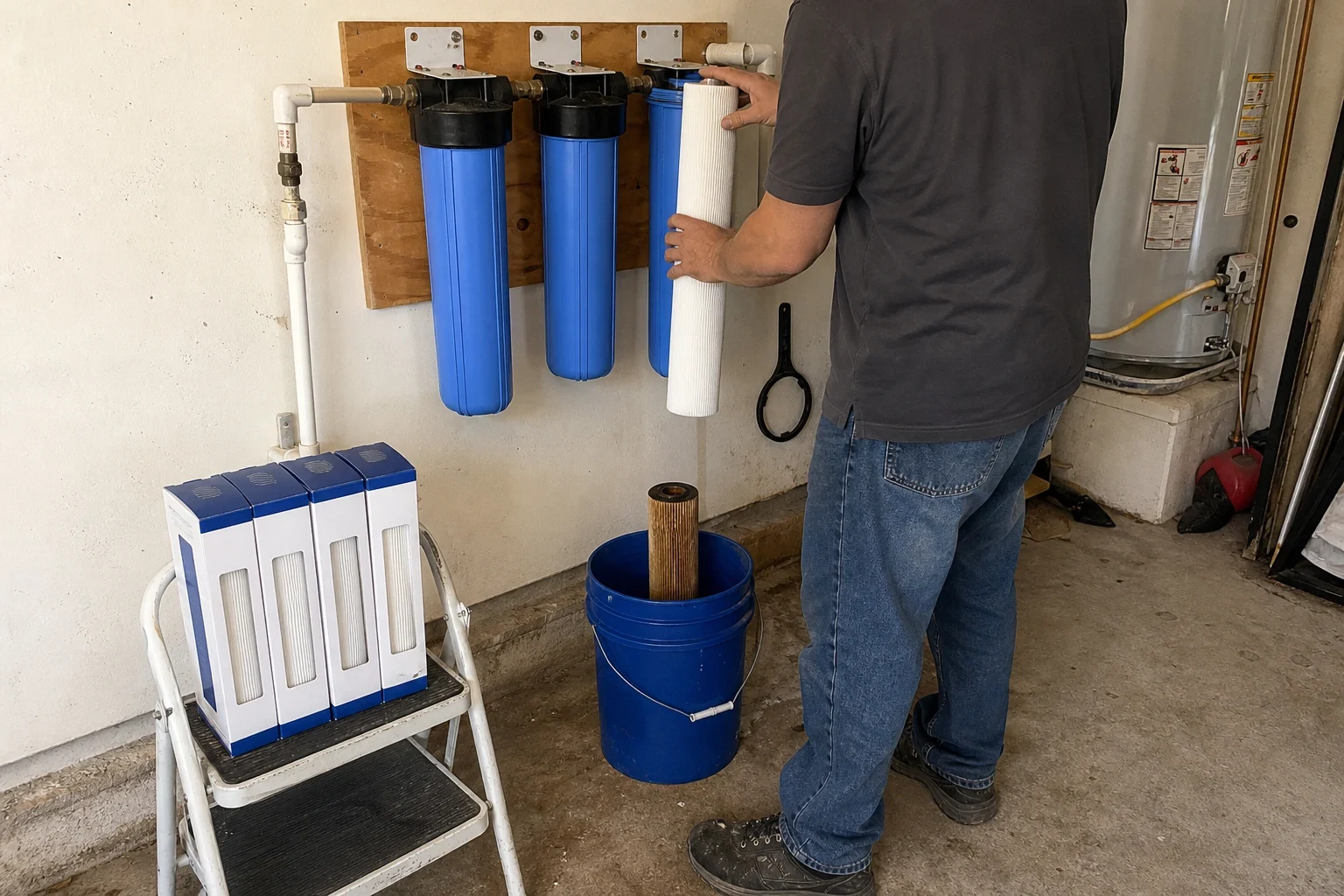
We change sediment cartridges, carbon blocks and RO membranes, then check that the system is actually doing its job. Before anything is swapped, we read pressure and water quality, so you learn why a filter wore out early instead of just paying for another one.
What filter maintenance covers and when it matters
Every filter in your home is a consumable. A pleated sediment cartridge loads up with particles until pressure drops. A carbon block runs out of adsorption sites and stops removing chlorine taste and odor. An RO membrane slowly loses rejection, and its prefilters clog first. None of this is visible from the faucet until the problem is already there.
Most of our maintenance visits start with a question: why did this filter fail when it did? A cartridge that is brown and slick after six weeks points to a sediment or iron load, not a bad filter. A housing that weeps at the cap usually means a dried or twisted O-ring. We find that cause first, because swapping a cartridge without fixing it just puts you back on the same schedule.
We service the whole-house carbon filtration, under-sink reverse osmosis and iron and sediment filtration systems we install, and we also work on systems you inherited with the house.
What a maintenance visit includes
- 01
Before-and-after readings
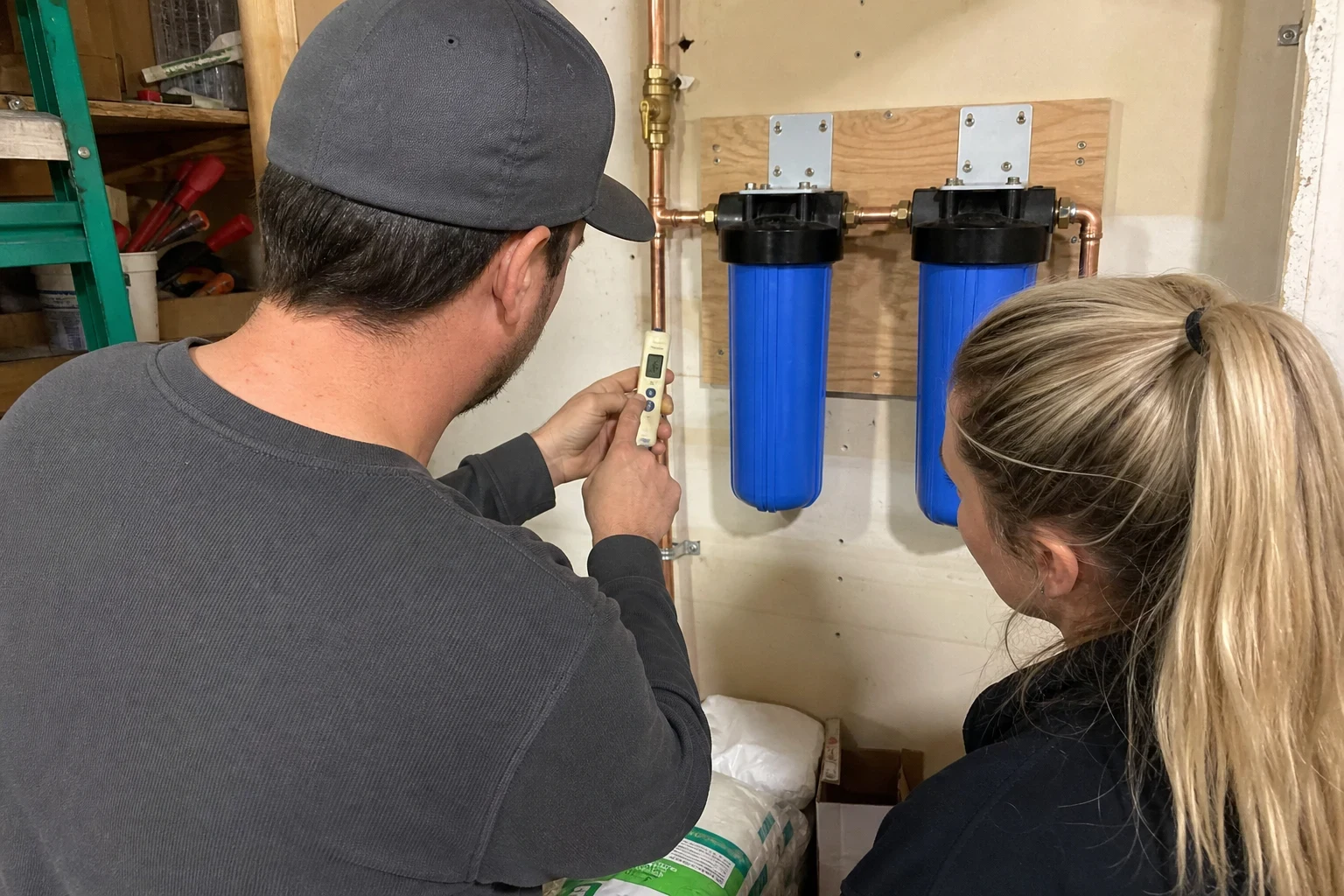
We check inlet and outlet pressure across whole-house housings and take a TDS reading on RO water. Readings taken before the change and again after it show whether the new cartridge fixed the issue.
- 02
Cartridge and media replacement
We match the size and micron rating to your housing, whether 10-inch standard, 20-inch or 4.5-inch wide. We do not guess at the rating and swap in whatever is on the truck.
- 03
O-rings and housings
We pull each O-ring, inspect it for flat spots or cracks, and reseat it with food-grade silicone lubricant. We replace any housing with stress cracks near the threads before it can let go.
- 04
RO sanitizing and membrane check
When the membrane comes out, we sanitize the housings and storage tank and check tank air pressure with the tank empty. A low tank charge is a common reason for slow RO flow that people blame on the membrane.
- 05
Softener and bypass checks
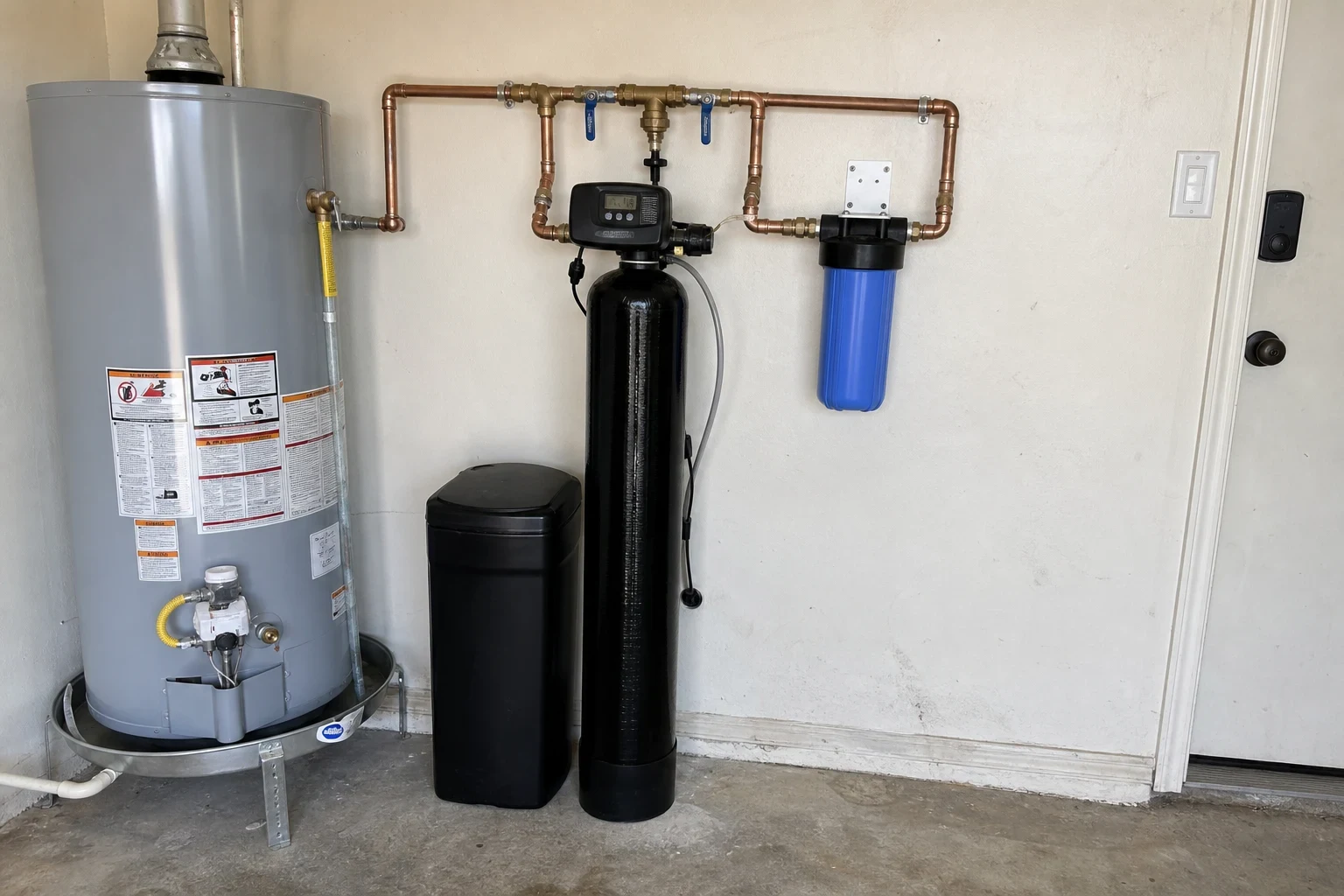
If a softener sits in the same line, we look at salt level, brine tank condition and the bypass valve position. We set the regeneration settings to your measured hardness, not a default.
- 06
Dated labels and notes
Each housing gets a label with the change date and cartridge type. You also get a short written note of what we found, so the next change is easy to plan.
Questions about Filter replacement?
Call(972) 885-6322Signs your filters are overdue
Pressure drops at every tap
A clogged sediment prefilter restricts the whole house. If showers weakened gradually over a few months, the cartridge is the first thing we check.
The chlorine taste came back
Spent carbon lets the disinfectant taste and smell through. This often happens well before the cartridge looks dirty.
RO faucet fills slowly
Clogged prefilters, a fouled membrane or a low tank charge can each cause it. We test to find out which before replacing anything.
Orange, brown or black on cartridges
Rust-colored loading suggests iron or pipe corrosion upstream. Black slime can be biofilm, and it calls for sanitizing, not just a new filter.
Drips at a housing cap
Weeping usually comes from an O-ring that was never lubricated or was pinched at the last change. It is a cheap fix that should not wait.
No idea when it was last changed
If the system came with the house and nothing is labeled, a baseline visit tells you what you have and what it needs.
How the visit runs
- 1
Tell us what you have
On the phone we ask about the system type, where it sits and any symptoms. Photos of the housing labels help us bring the right cartridges.
- 2
Measure, then open up
We record pressure and water readings, shut the inlet valve and relieve pressure. Then we open each housing and look at how the old media loaded, since that pattern is evidence about your water.
- 3
Replace, sanitize, reseal
New cartridges go in, housings are cleaned, and O-rings are lubricated and seated. Most single-system visits take under an hour, with water off only during the swap.
- 4
Flush and retest
We flush new carbon until the fines clear, purge air from the lines and repeat the readings. If something still looks wrong, we explain the likely cause and whether water testing would confirm it.
What moves the price of filter service
The bill mostly reflects the parts your system uses and how many stages it has. Labor is a smaller share on a simple swap and grows when housings are hard to reach or need repair. We go over the expected cost by phone before the visit and confirm it on site before we replace anything beyond the cartridges.
- Number of stages and systems
- A single whole-house carbon filter is one change. A five-stage RO under the sink plus a sediment prefilter in the garage is several.
- Cartridge size and type
- Wide 20-inch cartridges and catalytic carbon blocks cost more than standard 10-inch sediment filters. Proprietary twist-in cartridges are often priced higher than standard sizes.
- Whether the membrane is due
- RO membranes last much longer than prefilters, so some visits include one and most do not. A TDS reading tells us which.
- Housing and fitting condition
- Cracked housings, seized caps or corroded fittings add parts and time. We show you the damage before replacing it.
- Access
- A system in a hot garage or a tight sink cabinet takes longer to service than one on an open wall.
Questions about cartridge changes and upkeep
Does each filter follow a fixed change schedule?
The box interval is based on typical water and typical use, which your home may not match. Generally, sediment prefilters fill up in a few months, carbon lasts longer and an RO membrane may run a couple of years. We set your schedule from how the old cartridges loaded and what our meters read.
What makes a sediment filter clog quickly?
Quick clogging means the water carries more particles than the cartridge was built for, such as iron, scale from older pipe or debris after utility work. We read the color and texture of the spent cartridge, and when it shows a real issue, iron and sediment filtration ahead of it can cut down on changes.
Will you work on a system someone else put in?
Yes. We service most standard housings and common RO units. When a system needs a proprietary cartridge that is no longer made, we say so early and go over your choices.
Can I change the cartridges myself?
With most standard housings, yes, and we can show you how on your own system during a visit. Common mistakes are a dry O-ring, a cross-threaded cap and new carbon that was never flushed. A service call now and then still helps, since we carry pressure gauges and a TDS meter most homes do not have.
How long will I be without water?
Just while the housings are open, which is usually brief. An RO system takes a few hours after service to refill its storage tank, so we flush and test before we go and tell you when it should be full.
Get your filters checked, not just swapped
Give us the brand or housing size and the symptom that caught your attention. We arrive with matching cartridges and the meters to trace why the last set wore out.