ServicesIron and sediment filtration
Iron and Sediment Filtration in Duncanville
Orange stains, gritty aerators and rusty first draws all have a cause. Sometimes it is the water coming in, sometimes the pipes or water heater inside your home. We find which one first, then install the filter that removes it.
What iron and sediment filtration does
Iron shows up in two forms. Ferrous iron is dissolved, so the water pours clear and turns orange after it sits or hits the air. Ferric iron is already oxidized into tiny rust particles you can see. Sediment is the broader category: sand, scale flakes and rust chips that collect in faucet screens, toilet tanks and appliance inlet valves.
Each one needs a different fix. A pleated cartridge catches particles but does nothing for dissolved iron. An oxidizing media tank handles dissolved iron but would clog fast on heavy sand. That is why we test before we quote, and why we check the plumbing inside the house. If the rust is coming from corroded galvanized pipe or an aging water heater, a filter at the main line will not stop it, and we will tell you so.
What the work includes
- 01
Source check before any equipment
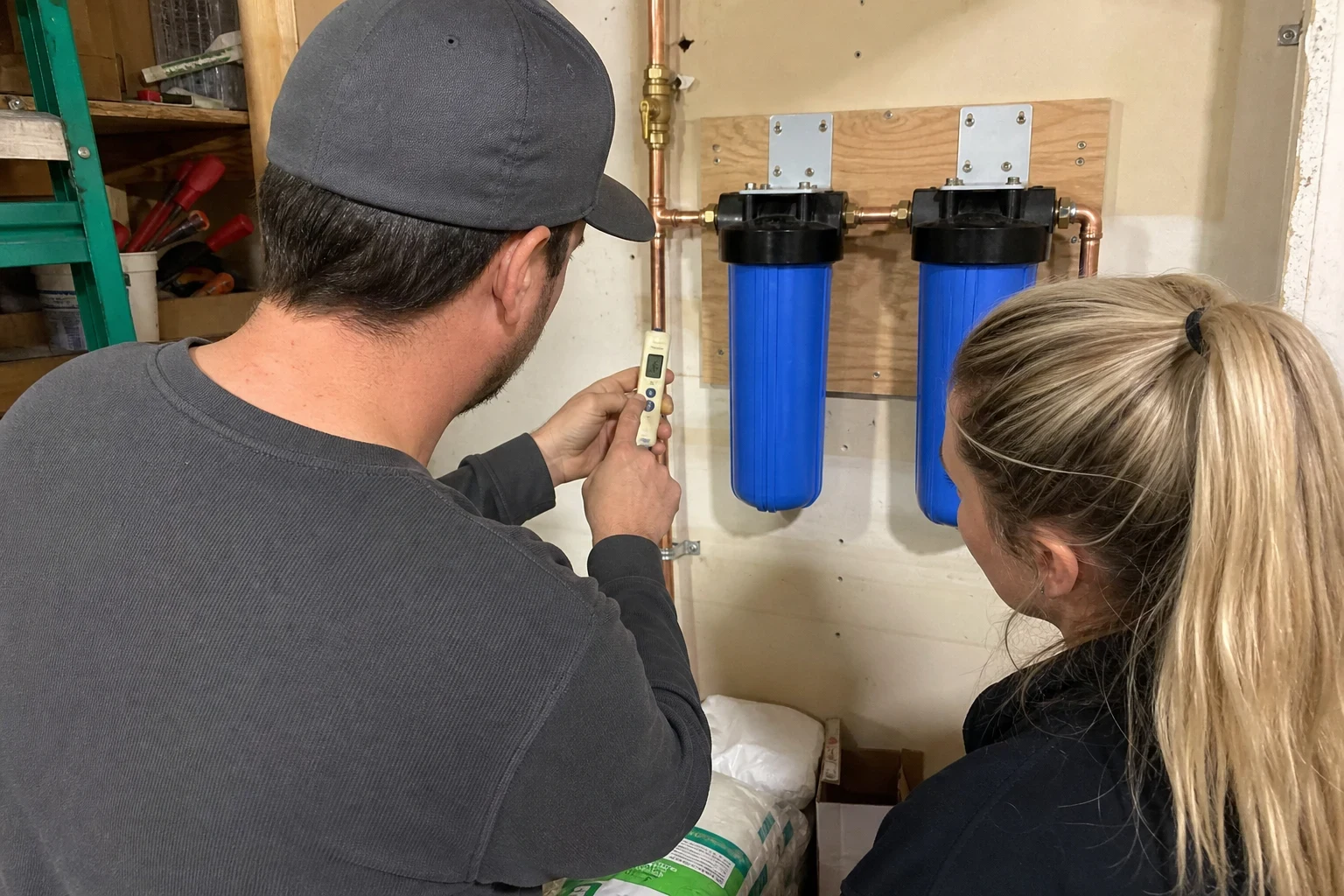
We test iron at the main line and at a fixture, and flush the water heater drain to see what settles out. A higher reading at the fixture than at the main means the iron is being picked up from pipe or the tank after the water arrives.
- 02
Spin-down sediment screen
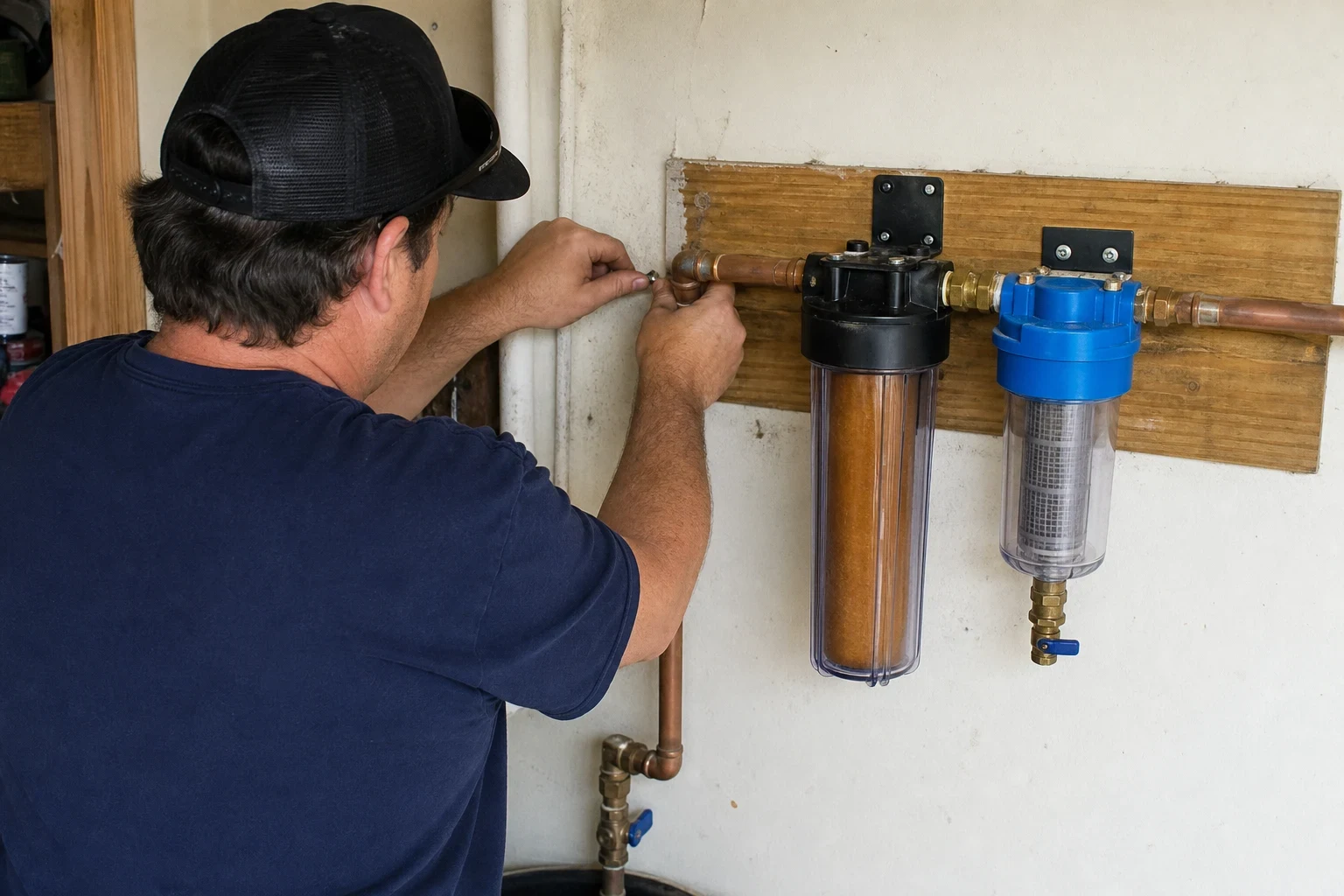
A clear-bowl screen with a flush valve catches sand and rust flakes ahead of everything else. You open the valve to purge it, so there is no cartridge to buy for that stage.
- 03
Cartridge filtration sized by micron
For finer particles we fit a big-blue housing with a spun or pleated polypropylene cartridge, usually stepping from coarse to finer ratings so the last cartridge does not load up in a week.
- 04
Backwashing media tank for dissolved iron
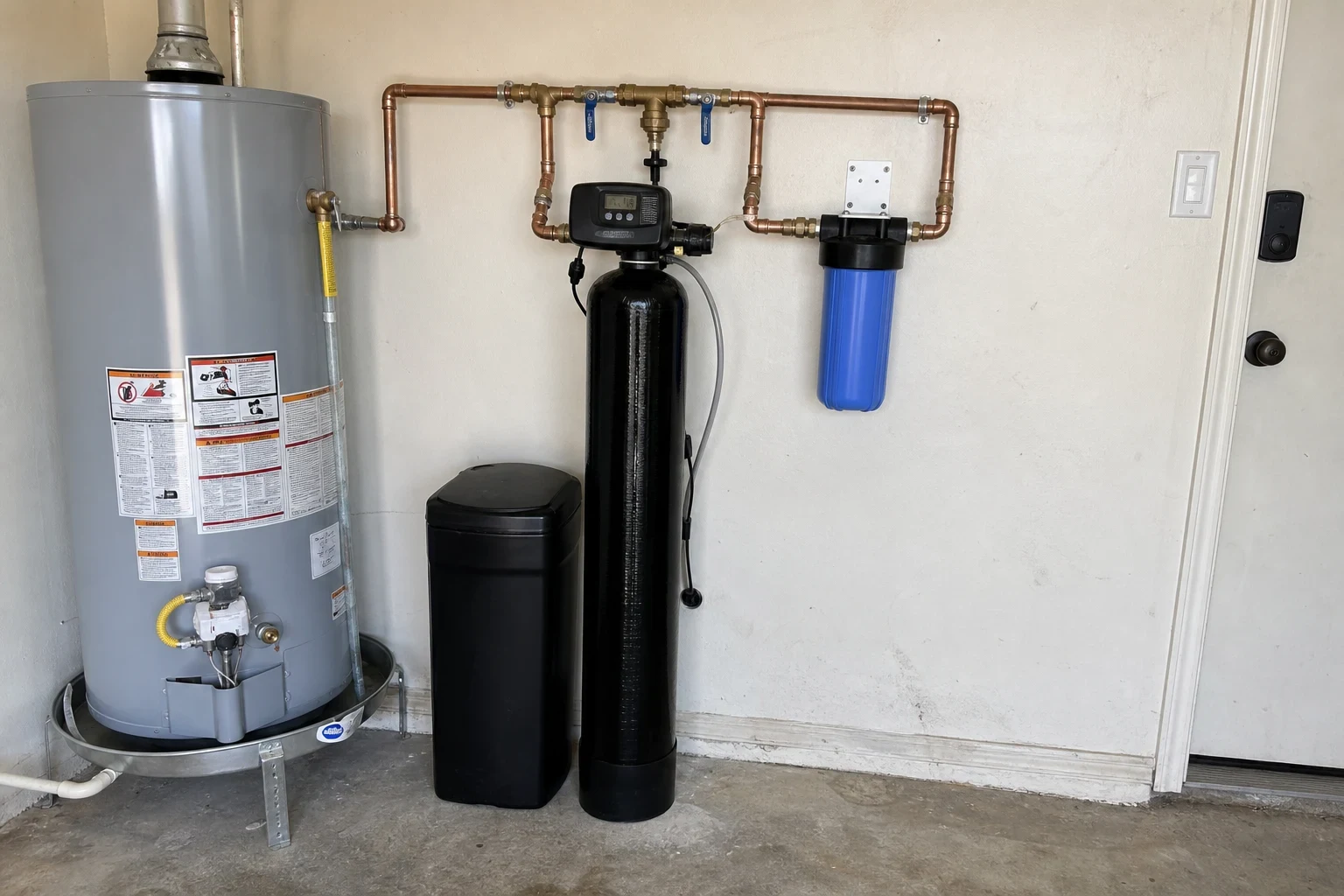
When the test shows dissolved iron, we install a tank with oxidizing media and a control valve that backwashes on a schedule. It needs a drain and an outlet nearby, which we plan before the install day.
- 05
Bypass loop and pressure gauges
We plumb in a bypass loop so your taps keep running while a cartridge is swapped. Gauges on the inlet and outlet sides show the pressure drop across the filters. When that gap widens, a cartridge is loading up, and you see it on the dial long before the shower turns weak.
Questions about Iron and sediment filtration?
Call(972) 885-6322Signs iron or sediment is getting through
Orange or brown rings
Stains in toilet bowls, tubs and under faucet spouts point to iron oxidizing as the water sits.
Grit in aerators and shower heads
If you keep unscrewing aerators to clear sand or dark flakes, particles are passing through the line.
Rusty water only on hot taps
Discolored hot water with clear cold water usually means the water heater tank is the source. Filtration will not fix that, and we will say so.
Laundry turning yellow
Whites that dull or yellow over a few washes often trace back to iron, even at levels you cannot see in a glass.
Appliances clogging early
Ice makers, dishwashers and washing machines have small inlet screens that sediment blocks first.
How the job runs
- 1
Test and track it down
We collect samples, look at the water heater and note what your supply pipe is made of. You get the readings and our view of where the iron or sediment starts.
- 2
Recommendation in writing
The filter stages, cartridge ratings and any media tank go on a line-item estimate. If the real fix is in the plumbing, the estimate states that clearly.
- 3
Main-line install
Installs usually take part of a day. We turn off the water, plumb in the bypass and housings, and cover floors and the garage area we work in. When a plumbing permit is required, we get it.
- 4
Flush and confirm
We flush everything, program the backwash schedule when there is one and test again at a faucet. Then we show you how to purge the screen and when cartridges are due.
What moves the price
A single sediment screen and a multi-stage system with a media tank are very different jobs. The test results decide most of it. You see every line on the written estimate before we start.
- Type and amount of iron
- Particle iron can often be handled with cartridges alone. Dissolved iron needs an oxidizing media tank, which costs more up front.
- Number of stages
- Heavy sediment may call for a spin-down screen plus two cartridge housings to keep the finer filter from loading up.
- Location and access
- Where your main line enters the house, and whether a drain and outlet are close for backwashing, changes how much pipe and labor the install takes.
- Ongoing cartridge use
- Water with more sediment uses cartridges faster, so we estimate the change interval along with the install.
Iron and sediment filtration questions
Can a whole-house filter stop rusty water caused by old pipes?
No. A main-line filter cleans water on its way in, and galvanized pipe adds rust downstream of it. We test at the main and at a fixture to separate the two before suggesting anything.
Is it a problem to drink water containing iron?
Iron in tap water is mostly a nuisance, not a usual health issue. It stains fixtures, adds a metallic taste and is hard on appliances, so the cost tends to appear in laundry, faucets and inlet valves. For a broader look at your water, our water testing covers more than iron.
Will a softener take out iron?
A softener handles small amounts of dissolved iron but fouls fast when iron is high or already oxidized. We suggest a softener only when a hardness test supports one, and we size iron treatment on its own.
How soon does a sediment cartridge clog?
It depends on the load. Water heavy with sand or rust flakes can fill a cartridge in a few weeks, while cleaner water may last several months. Keep an eye on the two pressure gauges; a growing gap means the cartridge is full. Our filter replacement and maintenance service can handle the changes.
Is this instead of carbon filtration or reverse osmosis?
No, it typically protects them. Iron and sediment clog carbon and RO membranes before their time, so this stage often sits upstream of whole-house carbon filtration or an under-sink reverse osmosis unit.
Get the cause found before you buy a filter
We test your water, check the pipes and water heater, and explain what the readings mean. Then you decide with a written estimate in hand.