ServicesWater testing
Duncanville Water Testing
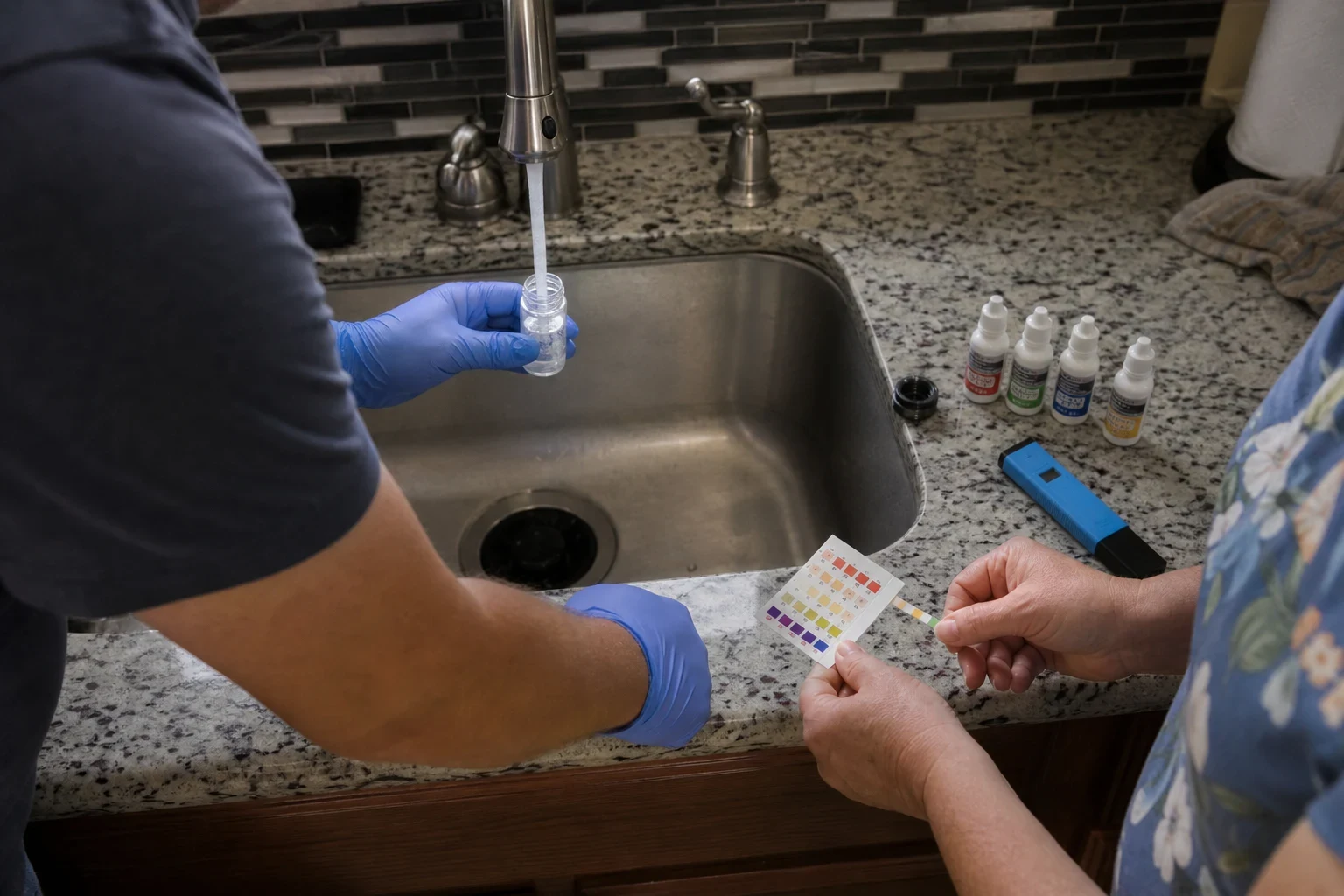
We find out what your water actually contains before suggesting a softener, carbon tank or reverse osmosis system. Readings are taken at your faucets, samples go to a lab when needed, and we go through each result with you so the fix fits the cause.
Why We Test Before We Recommend Anything
Most water complaints have more than one possible cause. A rotten-egg smell can come from the water heater's anode rod rather than the supply. White crust on a faucet aerator might be calcium scale or it might be silica. Orange stains can point to iron in the water or to corroding galvanized pipe inside the walls. Each of those calls for a different fix, and some need no filter at all.
Water testing gives us the data to tell them apart. Your utility tests the water it sends out, and it publishes those results. What it cannot see is what happens after the meter: the pipe, solder, fixtures and water heater inside your home. That is where we look.
When the readings come back clean for the concerns you raised, you hear that plainly and no equipment gets quoted. When they point to a real problem, the recommendation is sized to your actual numbers.
What a Water Test Covers
Hardness in grains per gallon
We titrate a sample on-site and report hardness in grains per gallon. That single number decides whether a water softener is worth considering for your home or is money you don't need to spend.
Free and total chlorine
We measure both. A large gap between free and total chlorine suggests chloramine, which ordinary refrigerator filters handle poorly and which needs catalytic carbon instead of standard carbon.
Iron, pH and TDS
Iron readings explain staining on fixtures and laundry. pH tells us whether the water is likely to be aggressive toward copper. A TDS meter gives a baseline for total dissolved solids and a reference point if you later add reverse osmosis.
Lab panels for lead and copper
Lead and copper cannot be measured reliably with a strip. When your home has older plumbing or brass fixtures, we collect a first-draw sample and send it to an outside lab for a measured result.
A written summary
You get each reading next to the level that matters for it, with a short note on what it means. No result is left unexplained.
Signs Your Water Needs Testing
A taste or smell changed
A sudden pool-water, metallic or sulfur odor is worth measuring before you buy a filter. The cause decides which filter media will actually remove it.
Stains on fixtures or laundry
Orange, brown or blue-green marks usually mean iron or copper. Testing shows whether the metal is coming in with the supply or from your own pipes.
Scale on fixtures and appliances
Crusty aerators, spotty glassware and a water heater that pops and rumbles can all point to hardness. A hardness number tells you whether a softener would help or just add salt costs.
Older plumbing or a recent repair
Homes with original galvanized lines, older solder joints or a newly replaced section of pipe are good candidates for a lead and copper check.
A filter that isn't helping
If you already have a system and the problem is still there, the media may be wrong for the contaminant. We test before and after the filter to find out.
How a Testing Visit Works
- 1
Describe the problem by phone
On the call, we ask what changed, when it started and roughly how old the plumbing is. Those answers decide which reagents and meters we bring and whether a lab bottle should come along.
- 2
Sampling at the right points
We draw from the kitchen cold tap and, when possible, from an outside hose bib or the point where water enters the house. Comparing the two shows whether a problem starts in the supply or inside your home.
- 3
On-site readings
Hardness, chlorine, iron, pH and TDS are measured in front of you. We show you the reagent color or meter reading as we go.
- 4
Lab samples, if needed
For lead or copper we may leave a bottle and instructions for a first-draw sample, taken after water has sat in the pipes for several hours. We ship it to the lab and let you know when to expect results.
- 5
Results and an honest recommendation
We explain each number and tell you what, if anything, it calls for. Sometimes that's under-sink reverse osmosis or whole-house carbon filtration. Sometimes it's a plumbing note and nothing else.
What Affects the Cost of Water Testing
The price depends mostly on how many things we measure and whether a lab is involved. We explain what is included when you call, so you know the cost before we come out. If you go on to have a system installed, the test results carry straight into sizing it.
- On-site readings versus lab panels
- Field tests for hardness, chlorine, iron, pH and TDS are quick. Lab analysis for lead, copper or other metals adds the lab's fee and shipping.
- Number of sample points
- One kitchen tap is simpler than comparing the supply, the kitchen and a bathroom on a different branch line.
- Before-and-after testing on an existing system
- Testing water both upstream and downstream of a filter you already own takes extra samples and more time.
- Follow-up retesting
- Some homeowners want a second test after a plumbing repair or a new filter. That is a separate visit with its own scope.
Water Testing Questions
Something not covered here? (972) 885-6322
My city already tests the water. Why test again?
The utility's results describe the water as it leaves their system. They don't reflect your service line, the pipe and solder inside your walls, or your water heater. Lead and copper in particular usually come from household plumbing, so only a sample from your tap shows what you are drinking.
Does a test mean you will try to sell me a system?
No. The test is there to find the cause. If your numbers are fine, we tell you that and leave. If a filter or softener makes sense, we explain why using your own results.
How long do lab results take?
On-site readings are done during the visit. Lab turnaround depends on the lab and the panel, so we tell you the expected timing when we send the sample and go over the results with you when they come back.
Can a test strip from the hardware store do the same job?
A strip gives a ballpark reading for hardness or chlorine, and that can be useful. It can't resolve hardness closely enough to size a softener, and it can't detect lead at the low levels that matter. For those we rely on titration, calibrated meters and outside labs.
Do I need to be home during the visit?
Yes, ideally. We need access to the kitchen tap and the main water entry, and the results make the most sense when we explain them with you looking at the readings.
Start With the Numbers
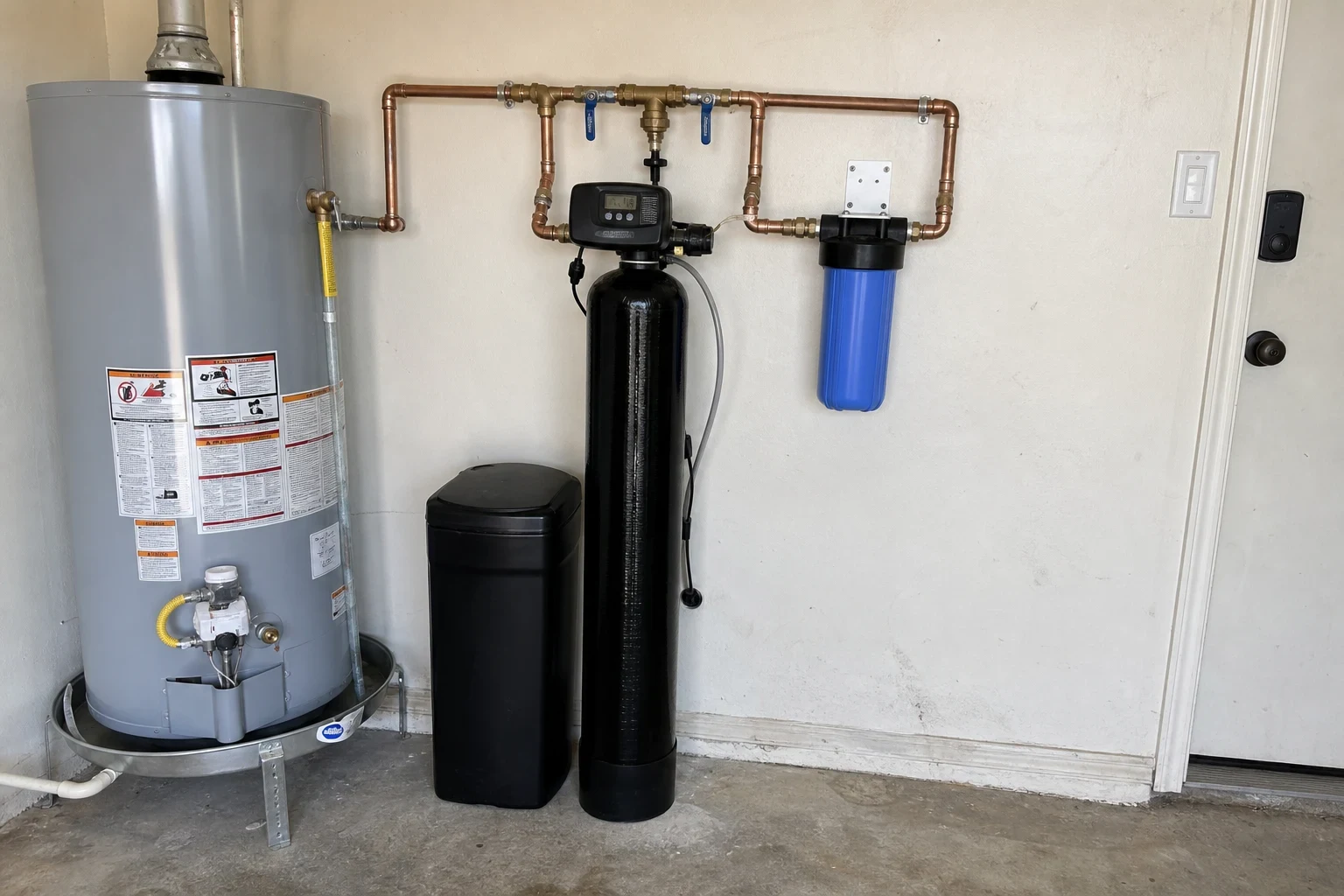
A test tells you what your water actually contains and which fix, if any, fits. We serve Duncanville and nearby towns including DeSoto, Cedar Hill and Lancaster.